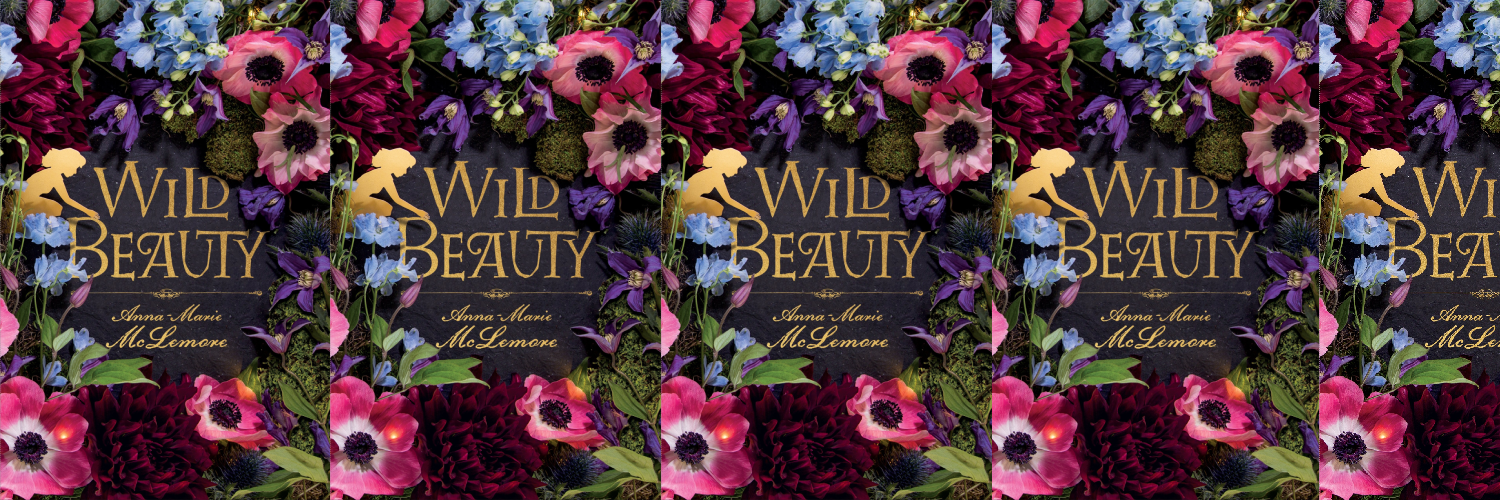
Forget-Me-Not: Wild Beauty by Anna-Marie McLemore
The Nomeolvides women are bound by three things:
1. Anyone they fall in love with vanishes.
2. If they leave the bounds of La Pradera, the estate they live on, they will die.
3. They can make flowers grow from their fingertips.
Wild Beauty by Anna-Marie McLemore is a gorgeous fairy tale of a novel, full of romance and tragedy, reflections on memory and legacy, generational trauma and family myth, curses and sentient houses, mysterious strangers, found family, matriarchy, queer love, magical flowers, and absolutely stunning prose.
For generations, the Nomeolvides women have lived at La Pradera, growing lavish and beautiful gardens with the magic that needs to be freed from their fingertips. They grow up knowing they are cursed, knowing that lovers will be taken from them, and that La Pradera holds them in its unyielding grip. They grow up in a house full of women named for flowers—grandmothers, aunts, mothers, sisters, cousins. Bound by the house and bound by their magic.
When the five Nomeolvides girls of the current generation discover that they are all a little bit in love with their neighbour, Bay Briar, they attempt a protection ritual, each sacrificing something they love to La Pradera in return for her safety. But Bay disappears anyway. And the sacrifice has an unintended result: Estrella (the only cousin who is not named for a flower) discovers a traumatized boy who is lost in time in their garden. As the women of the house rally to help the boy, Fel, they wonder—is the house returning vanished lovers from the past? Or is something else going on? Can they keep Estrella and Fel from falling in love, with disastrous consequences?
The story manages to simultaneously be a fantasy, a romance, a time travel story, and a mystery. And while it seems like that might make for a chaotic story, it does not. Anna-Marie McLemore balances all of these elements perfectly, and infuses the whole thing with old-fashioned fairy tale vibes. And not the sugar-coated kinds of fairy tales, either. This story is full of beauty but also violence, of magic that is exquisite but also brutal.
Like any good story, Wild Beauty is about change. It is about the breaking of bonds. It is about what happens when both La Pradera and the women who live there are threatened, and a new and menacing male figure flexes his patriarchal muscles around them. And it is about what happens when Estrella, who is the only member of the family to be unable to control the flowers that burst from her, continues to be untamed.
Perhaps my favourite thing about this book (although it is difficult to choose just one) is the way it dips in and out of the complexities of love in the midst of a story where so much is happening. In this way it breaks with fairy tale tradition, since fairy tales are focused primarily on action and and not so much on character interiority.
But Wild Beauty is as much about emotion as it is about any action or event. The point of view alternates between Estrella and Fel, and theirs are the most nuanced of the emotions that we see, but we also get glimpses of the other characters’ inner lives, watch them struggle to make impossible choices, watch them figure out love and grief and fear. It is a masterpiece in its perceptive portrayal of emotion.
Wild Beauty is a complex story told in a beautiful and fluid way. If you like your stories magical and your heartstrings tugged, you won’t do better than to pick this one up.
Comments