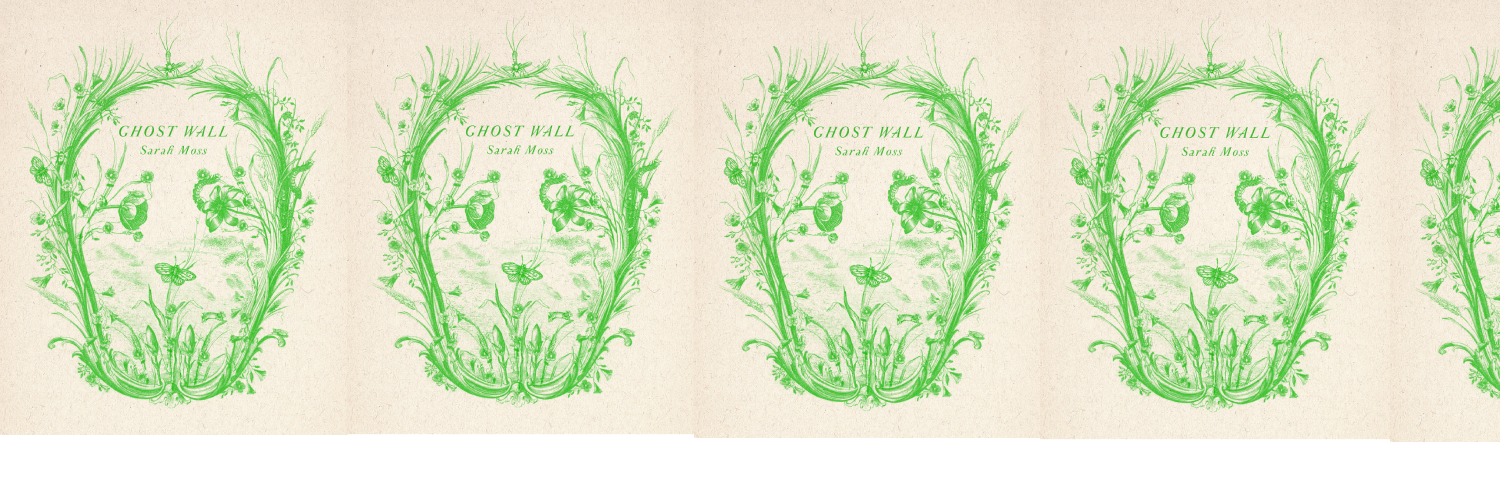
Heat, Haunting, and Heartbreak: Ghost Wall by Sarah Moss
Content warning: child abuse, ritual sacrifice
This novella was not quite what I was expecting. It tells the story of seventeen-year-old Silvie, who, along with her parents, is accompanying a group of university students and their professor on a 2-week “experimental archaeology” camp to reenact Iron Age life in northern England. Silvie is not a student. Nor is her father, who is behind this venture, a professor—he is a bitter, blue collar man who is obsessed with the ancient Britons. He is also sadistic, misogynistic, and abusive to both Silvie and her downtrodden mother.
While the students and the professor engage in light role-playing, sleep in nylon tents, and sneak off to the local Spar for modern-day food and ice cream, Silvie’s father insists that she and her mother live “authentically,” which means no sleeping bags or pillows, no food but what they can hunt and forage, and a mandatory admiration for the ghoulish fascination that he has with the “bog bodies”—ancient preserved corpses (primarily women and girls) that have been found in the peat with evidence of ritualistic deaths.
So why was this book not what I thought? Well, the cover blurb tells us that as the archaeology group builds its own skull-topped ghost wall—an ancient practice that was presumably meant to be a barrier against enemy invaders—they find a “spiritual connection to the past.” Other descriptive words such as “fable” and “mythic” made me think that this story would have some magical realism to it. It does not. It is brutally real in its portrayal of a stifling, claustrophobic situation in which a young woman is dragged deeper and deeper into a hell of her father’s making.
To say I “enjoyed” this book wouldn’t be quite right. But I couldn’t put it down. And I loved the language of it and the voice of Silvie, who tells the story almost like she is writing in her diary. In fact, Silvie is one of the most engaging narrators that I’ve read in a long time.
The language here is a blend of Silvie’s informal voice and a more poetic, stunning descriptive sensibility. It seems as though this shouldn’t work, but it does. Silvie is a character who is highly attuned to everything—from the nature around her to the subtlest cues from the people in the group to the ancient ghostly people who are haunting this experience at every turn. The depth of her observations and her attention to unspoken dynamics ring true, because it is clear that Silvie has had to cultivate this level of sensitivity to her father’s moods and whims in order to survive.
As the long days crawl forward, the sense of claustrophobia intensifies. The days are cloudless and relentlessly hot. The men of the group become more and more enthralled with their romanticization of the past and its brutality. Silvie and her mother exist in a haze of fear and, in Silvie’s case, occasional bursts of defiance. Only Molly, the only woman in the group who is not afraid of the men, offers a counterbalance to this horrifying scenario. It is in Sylvie’s budding friendship with and shy attraction to Molly that the book’s heart lives.
There are class and race elements to this story as well. It is strongly suggested that for Silvie’s dad, part of the obsession with ancient Britons is the idea of a racial “purity.” And there is tension between Silvie’s northern, working-class family and the southern, university-educated group of students. Horrifyingly, what begins to bridge this gap is the common interest in building the ghost wall, a project that rapidly heads in a violent and exploitative direction.
Ultimately, Silvie, like the bog bodies, is a person profoundly betrayed by those who were meant to care for her. Ghost Wall is a short, uncanny, haunting meditation on ancient and modern cruelty, on rituals and meaning, on nature and inevitability. It also leaves, like a trail of breadcrumbs, a narrow hopeful path forward.
Comments