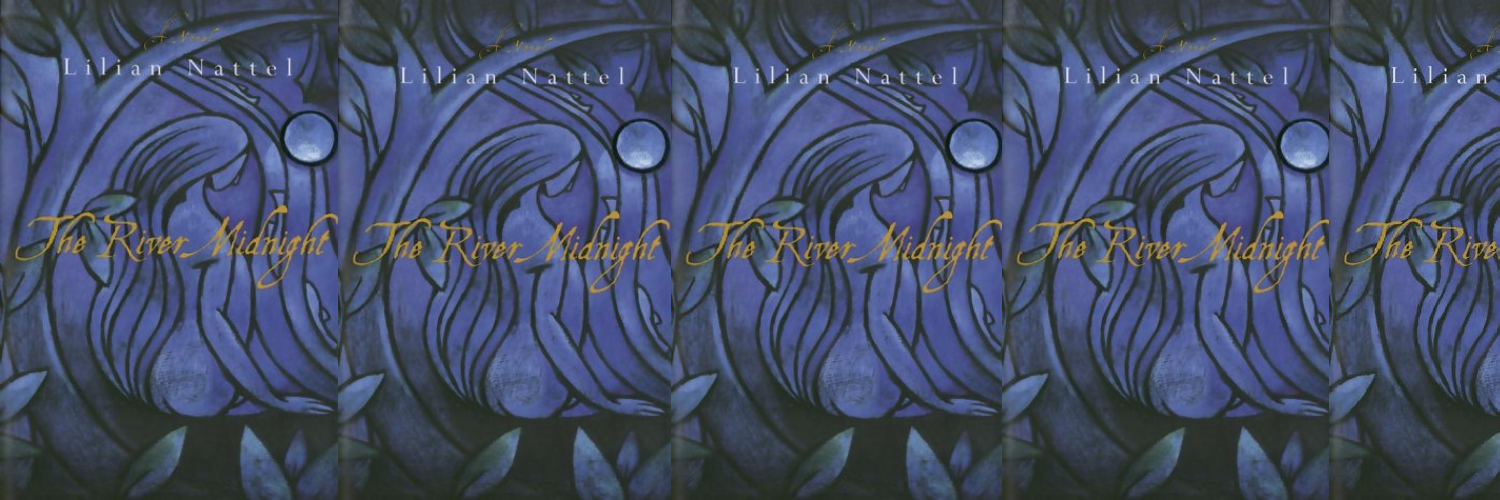
The Subtle Magic of The River Midnight
I do love a book full of magic. And perhaps especially so when the magic is not so showy and centre-stage. Don’t get me wrong—I’m not opposed to a romp filled with wizards and dragons—but sometimes when a story very subtly weaves in a few strands of the magical or the otherworldly, it makes those elements that much more potent. They aren’t part of the everyday. They are something to make you stop and catch your breath.
The book on my mind at the moment that does this pitch perfectly is The River Midnight by Lilian Nattel.
The River Midnight paints an exquisite, sensory, and detailed portrait of a fictional Jewish shtetl in Poland in the 1890s called Blaszka. It focuses—in a very circular, labyrinthine way—on four women of the shtetl, who were known in their youth as the vilda hayas: the wild creatures.
There is Hanna-Leah, the beautiful, tall, and dissatisfied butcher’s wife with the kind heart and the sharp tongue; Faygela, the mother of many who should have been a scholar and sees her dead father frequently roaming the forest; Zisa-Sara, who tried for a better life in the city but died instead, and whose daughter Emma is now back in Blaszka with revolutionary ideas; and Misha, the midwife, great-granddaughter of a woman killed for witchcraft, determined and independent and formidable.
These women and their friendship form the heart of the story, out from which spreads a web of relations and connections, all supporting one another across time and space and fortune. While I was reading this book, I felt enveloped in the warmth of their community. I was struck over and over how the shtetl itself was a living, breathing being, and how its members cared for and were responsible for one another.
Throughout the story, two enigmatic figures turn up in significant moments—the Director and the Traveler. Demons, or angels, or some kind of mixture of the two? The fates of the women and their community are bound up with these beings.
The people of Blaszka encounter the supernatural in a plethora of different ways, according to their needs or their follies. They always take it in their stride, being a part of a community that both embraces and celebrates the idea of things beyond earthly life. For them, spirit is not separate from their daily existence—rather, an encounter with a ghost, or a warding off of the evil eye, or the secret ability to turn into a tree frog—is just par for the course.
As I said at the start, these elements of magic are minor characters in this tale. The story is also a history, and a beautifully rendered image of a certain time and place. The people of Blaszka are wonderful, and flawed, and as real as you or I.
The story also has an unusual structure, one of overlapping, concentric circles, where the narrative will travel around and land back upon itself, bringing you to a moment you have witnessed before, but from a different perspective, or with a new understanding. It is quite a feat of storytelling, and that this is a first novel is inspiring.
I loved this book. I read it slowly, as that seemed to be the pace it demanded. All of the details are worth taking time over, and if you’re like me, you’ll want to sink into the community of the shtetl, with its rituals and its graceful interdependence, over and over again.
Comments