Conscious Language 101
What is conscious language?
Simply put, it is understanding that language is not neutral, and choosing to use it intentionally in a way that does not cause harm.
Alex Kapitan of Radical Copyeditor has a helpful framework for seeing language on a spectrum from harmful to healing. Alex’s framework acknowledges that language, at its best, can create and inspire and restore. At its worst, it can be violent, hateful, and actively harmful.
And in between these things is where most of us fall—not trying to use language in a way that can have a damaging impact, but sometimes doing so because we just don’t know better. That’s where conscious language comes in. Conscious language helps us understand the unintended effects that our words have and ensures that our impact matches our intentions.
The English language is awash in words and idioms that are rooted and invested in marginalization, racism, sexism, ableism, and more. Lots of these expressions have been ingrained in us so deeply that we don’t even notice their harm, especially if we are not a part of the community that they are harmful to. But we don’t have to accept that, or default to those old ways of speaking/writing.
Intentional use of language is already a major part of writing craft. Conscious language is simply an element of this, one that all writers can benefit from. It is important to note that the purpose of conscious language is not to limit. Rather, it is a deliberate decision to craft sentences that deliver the impact you desire—and only the impact you desire.
What conscious language is not
Conscious language is not the same thing as authenticity reading (also known as sensitivity reading). Authenticity reading is a service that authors should seek out if they are writing about characters, events, experiences, identities, or cultures outside of their own lived experience. Authenticity readers are members of the communities that are being written about and will provide an assessment of the representation in the manuscript. This is an invaluable service, and it is separate from a general conscious language assessment.
Resources
Happily, there are lots and lots resources available for anyone wanting to be more conscious about their use of language. Whether you are a writer, a critical reader, or a person who simply wants to work towards positive transformation in the world, conscious language is a necessary tool in your toolkit.
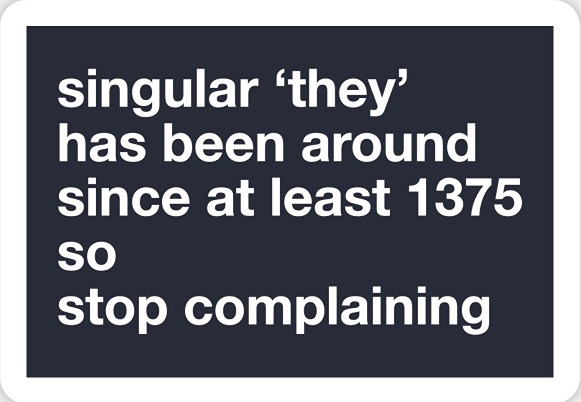
The “singular ‘they’” image at the top of this post is from the merch page of Helen Zaltzman’s excellent language podcast The Allusionist.
Comments